Living in Bulgaria as a Foreigner: A Practical Guide for Foreigners

At an event

Moving to a new country almost always comes with mixed emotions. There is excitement, curiosity, sometimes relief – but also uncertainty. Bulgaria is no exception.

For most foreigners, the real challenge does not come from paperwork, residence registration, or even from learning the alphabet. It comes later, in everyday life – in conversations that feel slightly uncomfortable, reactions that are hard to read, or situations where you walk away wondering, “Did I misunderstand something?”

This guide is intentionally practical, not perfect.

Cultural misunderstandings are normal. You are not expected to “become Bulgarian.” The goal is much simpler and far more realistic: to feel calm, confident, and able to navigate daily life without constant self-doubt.

Language and culture always move together. When one becomes clearer, the other follows. This is something we see every day at Kristina Progress, where learning Bulgarian is never separated from real-life context.

Everyday communication in Bulgaria: where culture is felt most
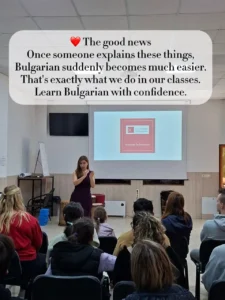
Kristina explaining BulgarianOne of the first things foreigners notice is how direct everyday communication can feel.

In Bulgaria, direct answers are usually preferred over polite ambiguity. This can feel abrupt if you come from a culture where answers are softened with explanations, apologies, or reassurance.

Direct “no” means clarity, not rejection

In practical, work, or administrative situations, answers are often short.

Example situation:
You ask a colleague:
“Can we move the meeting to tomorrow?”
They reply:
“No.”

There is no explanation, no apology, no emotional tone. This does not signal irritation or personal rejection. The answer is simply complete.

How to react:
Accept the answer at face value and continue calmly. If needed, follow up with a practical question like “Is another day possible?”

“We’ll see” usually means uncertainty, not agreement

This phrase often causes false expectations.

Example conversation:
You ask a friend:
“Will you come to dinner on Friday?”
They reply:
“We’ll see.”

In Bulgaria, this usually means “I don’t know yet” or “I’m not committing.”

How to react:
If the matter is important, check again later with a clear question instead of assuming a yes.

Small talk is limited – clarity is appreciated

Conversations often move quickly to the point.

Instead of long introductions, it is perfectly acceptable to say:
“Can you help me with this?”
or
“I don’t understand.”

Clear communication is valued more than verbal cushioning.

Silence, tone, and emotional expression

Silence is not awkward

If a conversation pauses, it usually means people are thinking or simply comfortable with the moment. Silence does not indicate boredom or tension.

Allowing silence often makes interactions feel calmer and more natural.

A raised voice does not automatically mean anger

Example:

Ventsislava with stickersTwo people speak loudly and emotionally. To a foreigner, it may sound like an argument.

In many cases, it is simply enthusiasm or engagement. Body language and facial expressions provide the real context.

“How are you?” may get an honest answer

When you ask “How are you?”, you may hear a realistic response like “Tired” or “Busy.”
This reflects sincerity, not negativity.

Body language and non-verbal cues

Non-verbal communication plays a major role.

Head movements
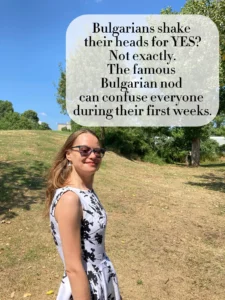
Bulgarian nod Kristina ProgressHead nodding may feel reversed at first and can cause confusion. Most Bulgarians are aware of this and adapt quickly once they notice misunderstanding.

In some situations, especially with older generations, a head movement that foreigners interpret as “no” may actually mean “yes”, which can be confusing at first. Listening to the verbal answer always matters more than interpreting the gesture alone.

Personal space and gestures

People may stand closer while speaking, especially after familiarity is established. This signals engagement. Hand gestures are commonly used to support explanations.
Time, flexibility, and expectations

“Now” doesn’t always mean immediately

Example:
You hear “Yes, now”, and the task is completed 15–30 minutes later.

This reflects flexible urgency, not disregard.

Punctuality depends on context

Being slightly late for social meetings is often acceptable. Being late for institutions, doctors, or formal meetings usually is not.

“I’ll call you” is open-ended

This often means “I will contact you if there is an update.”
It is not always a promise with a fixed timeline.

Social life and hospitality in Bulgaria

Hospitality is warm, but informal.

Food and generosity

If you say “just a little”, you may still receive a full plate. This is generosity, not pressure. Accepting some food is polite; declining later is fine.

Help is shown through actions

Support is often practical rather than verbal. People may help without offering emotional reassurance.

Personal questions are usually interest, not intrusion

Questions about family, age, or future plans are often a way to connect, not to invade privacy.

Work culture and everyday professionalism

Hierarchy and experience are usually respected.

Direct feedback is not personal

When someone says “This doesn’t work”, they are commenting on the idea, not the person.

Initiative is appreciated when paired with awareness of timing and context.

Even basic Bulgarian helps foreigners read workplace dynamics more accurately.

Traditions you don’t need to master (but should respect)

One of the biggest concerns foreigners have when living in Bulgaria is the fear of “doing something wrong” when it comes to traditions. Holidays, name days, family gatherings, customs – it can all feel overwhelming, especially when you don’t fully understand the meaning behind them.

The good news is simple: you are not expected to know every tradition, nor to participate perfectly.

In Bulgarian culture, traditions are primarily about belonging and continuity, not about testing whether someone knows the rules. Locals grow up with these customs over time, often learning them gradually and informally. Foreigners are not held to the same expectations.

What matters most is attitude, not performance.

Observing is enough

In many situations, simply observing is completely acceptable. Whether it’s a family gathering, a holiday celebration, or a local custom you encounter for the first time, watching how others behave is a respectful and natural way to learn.

You are not expected to immediately join in or understand every detail. Curiosity without pressure is welcome.

Asking questions is not inappropriate

Many foreigners worry that asking questions might seem ignorant or disrespectful. In Bulgaria, the opposite is often true.

Asking simple questions like:

  • “What does this holiday mean?”
  • “Why do people do this?”

is usually seen as interest, not intrusion. It shows engagement and respect, not lack of knowledge.

Participation is optional – respect is not

You may be invited to take part in traditions such as name days, family celebrations, or holiday rituals. Accepting an invitation is appreciated, but declining politely is also acceptable.

What matters is how you decline, not whether you participate.

Showing respect can be as simple as:

  • acknowledging the occasion
  • listening when others explain its meaning
  • avoiding dismissive comments

You do not need to fully understand or emotionally connect to every tradition for it to be respected.

No one expects perfection

Making small mistakes – standing at the wrong moment, not knowing what to say, or feeling unsure – is completely normal. These moments are rarely judged harshly. Most people understand that traditions are learned over time and that cultural familiarity develops gradually.

Trying, listening, and being open matters far more than doing everything “correctly.”

A practical way to think about traditions

Instead of seeing traditions as rules to follow, it helps to see them as windows into how people connect with family, history, and community. You are allowed to look through those windows at your own pace.

Respect does not require mastery.
Understanding does not require immediate participation.

And over time, what once felt unfamiliar often becomes simply another part of everyday life.

What foreigners often misunderstand about Bulgaria

Many initial frustrations come from interpretation, not intention.

People may seem reserved rather than cold. Service may feel direct rather than unfriendly. Smiles are intentional, not automatic.

Complaining is often a form of bonding – a way to share reality, not pessimism.

Institutional communication may sound strict, but it reflects procedure, not personal attitude.

Kristina Progress da What surprises foreigners after 6–12 months in Bulgaria

Many foreigners say the biggest cultural differences appear after the initial adjustment period.

Once life becomes routine, expectations shift. What once felt temporary becomes permanent, and understanding local patterns becomes more important than curiosity.

This stage often determines whether someone feels settled or constantly frustrated.

Things that feel strange at first, but later feel normal

Directness, limited verbal reassurance, institutional strictness, and reserved relationships often feel uncomfortable initially.

Over time, many foreigners describe these same traits as predictable and even reassuring – because clarity replaces ambiguity.

Cultural adaptation is emotional, not just intellectual

Understanding culture is not only about knowing what to do. It is emotional.

Feeling understood, even occasionally, changes how safe daily life feels. This emotional shift often marks the real beginning of integration.

How Bulgarians usually perceive foreigners

Many foreigners worry about how they are seen.

In most cases, Bulgarians value effort more than correctness. Trying, asking, and showing interest matters far more than speaking perfectly or behaving flawlessly.

What helps foreigners feel accepted faster

Foreigners often discover that acceptance in Bulgaria does not come from mastering the language quickly or following every cultural norm perfectly.

It comes from consistency, presence, and comfort with who you are. Greeting people regularly, remembering names, and showing basic curiosity often matter more than flawless behavior.

Acceptance grows quietly, through repetition rather than performance.

Common mistakes foreigners make (and why they’re understandable)

Many foreigners try very hard to be polite, flexible, and agreeable.

In Bulgaria, this can sometimes create confusion rather than harmony. Over-softening answers or avoiding clarity may feel respectful, but it can obscure meaning.

Learning to be calm, clear, and honest often works better than over-adapting.

What changes once you stop translating in your head

A noticeable shift happens when foreigners stop translating every interaction mentally.

Tone feels clearer. Reactions feel less personal. Situations require less emotional energy.

This moment often marks the beginning of real comfort – when life stops feeling like constant interpretation.

Regional differences (without stereotypes)

Cultural behavior can vary between cities, regions, and even neighborhoods.

Life in Sofia may feel different from smaller towns or rural areas – not better or worse, just different. Observing local patterns matters more than applying general rules.

Language as the key to cultural integration

Ventsi explaining BulgarianLearning Bulgarian doesn’t just help you speak – it helps you understand why things work the way they do.

Even basic language skills often reveal tone, intent, and context. Situations that once felt cold begin to make sense.

At Kristina Progress, language learning is always connected to life – not perfection, but confidence, not memorization, but understanding.

Frequently asked questions

No, but basic awareness significantly reduces stress and misunderstandings.

Yes. Confusion is part of adaptation, not a personal failure.

Even basic Bulgarian can change how situations feel emotionally.

Rarely. Effort and respect matter far more than correctness.

There is no fixed timeline. Many foreigners feel noticeably more comfortable within a few months.

Integration is a process, not a checklist

Living in Bulgaria as a foreigner is not about doing everything right.

It’s about understanding, adapting, and feeling comfortable enough to be yourself.

If adaptation feels slow or uneven, that’s normal. Integration rarely follows a straight line.

What matters is not speed, but comfort – and that grows gradually.

With time, language, and context, everyday life becomes calmer and more predictable – and that is when Bulgaria truly starts to feel like home.

If you ever feel that understanding Bulgaria would be easier with a bit more language confidence and real-life context, you don’t have to do it alone.

You can always choose one of our Bulgarian lessons, conversation formats, or language trips and discover much more – not only about the language, but about everyday life, culture, and communication in Bulgaria. Learning becomes easier when it’s connected to real experiences.


Leave a Reply

Your email address will not be published. Required fields are marked *