


Every generation has its own words which make the previous one wonder what exactly went wrong.
 At some point Bulgarian teenagers started describing things as “криндж”, people became “делулу”, someone could have a particular “вайб”, you could “флексваш with something” and suddenly knowing perfectly good Bulgarian was apparently no longer enough to understand a conversation between two people born after the year 2000.
Nothing particularly unusual here, of course. Slang has always changed between generations. What is interesting this time, though, is just how quickly many of those words arrived, almost all at once, and how naturally Bulgarian has managed to absorb them.
Yes, we did not simply take a collection of English words and start speaking English in the middle of Bulgarian sentences. That would be far too easy. We took them, wrote them in Cyrillic, gave them Bulgarian endings, started conjugating some of them, changed the meaning of others slightly and then carried on as if nothing strange had happened. It’s tough for the locals. Imagine if you are a foreigner and you’re trying to integrate…
At Kristina Progress, during our Bulgarian classes, we often say that learning Bulgarian is not only about grammar and vocabulary, but also about understanding how Bulgarians actually use the language around you. Whether you are just studying for fun, or to relocate, you will always do well to communicate with the locals. The problem is, however, that nowadays, especially online, that language sometimes looks rather different from the one you are going to find in your first textbook.
So… how did we actually get here, and how daunting is it to learn Bulgarian language as a foreigner in 2026?
- It began with something Bulgarian has been doing for centuries:
First of all, borrowing foreign words is nothing new.
Bulgarian contains words which have come from Turkish, Greek, French, German, Russian, Italian and plenty of other languages over the centuries. English is simply the latest particularly powerful source. Previous generations encountered foreign words through trade, politics, books, cinema, music and later television. Gen Z grew up with YouTube, gaming, Instagram, Twitch, TikTok, Reddit and an internet where an expression can begin in one corner of the English-speaking world and appear on somebody’s phone in Bulgaria approximately five minutes later.
There does not even need to be a Bulgarian translation anymore. Only a transliteration…
- Firstly, English simply becomes Cyrillic
 This is obviously the easiest step to notice.
Cringe becomes криндж.
Vibe becomes вайб.
Hater becomes хейтър.
Random becomes рандъм.
The meaning remains more or less recognisable, but the spelling slowly moves into Bulgarian. What began as an English word appearing in the middle of an online conversation starts being written according to how Bulgarians hear and pronounce it.nAnd once that happens, something interesting has already changed.
Криндж does not really feel exactly the same as “cringe” anymore.
 In English, “to cringe” is originally a verb – you physically or emotionally recoil from something. In Bulgarian, криндж entered primarily as a thing, a description and eventually almost an entire category of human experience.
“Това е криндж.” – “This is cringe.”
A perfectly understandable Bulgarian sentence containing a word that would probably have looked very strange to most Bulgarians fifteen years ago.
And the fun part begins when simply transliterating the word is no longer enough.
- Then Bulgarian grammar gets involved:
 Bulgarians have a rather wonderful habit when borrowing something – we want to make it work. It is not enough to have криндж. Very quickly we also get кринджов, кринджова, кринджово and кринджови.
Something is no longer simply криндж. It can now be properly, grammatically Bulgarianised.
And at that point the foreign word has already crossed an important border. It is following Bulgarian noun gender rules.
The same thing happens constantly with borrowed words. They receive gender, articles, plural forms and endings which never existed in the original language. Вайб can become вайбът. A person can be a хейтър, but if its a group, then its хейтъри.
This is one of the funniest things about people worrying that English words will somehow destroy Bulgarian. Bulgarian often reacts by eating them.
- And then we start creating verbs:
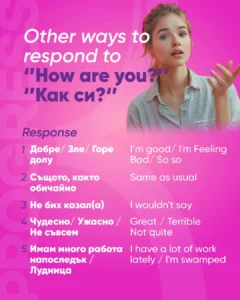 This is probably where things become particularly entertaining. English gives us a word and Bulgarian decides:
Alright, but can I conjugate it?
And apparently the answer is yes.
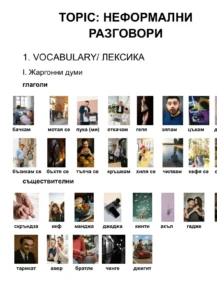
To hate becomes хейтвам. To flex becomes флексвам. To scroll becomes скролвам.
And once the magical Bulgarian -вам appears, the word can suddenly participate in normal Bulgarian grammar.
Аз флексвам.
Ти скролваш.
Той вайбва.
There, we have it! The English language has provided the material and Bulgarian has done the construction work.
The interesting thing is that people often create and understand these verbs without anybody formally teaching them. There is no committee somewhere deciding that “to flex” shall henceforth become флексвам. Someone uses it, somebody else understands immediately, other people repeat it and eventually it begins sounding completely normal within a particular group, which is actually a wonderful demonstration of how languages work.
- Social media changed who gets to introduce new words
This might actually be the biggest difference between Gen Z slang and many older forms of slang – you no longer need television, newspapers, famous musicians or even particularly influential people to spread an expression.
You need a meme, or a TikTok reel. A streamer, or a random somebody making a joke which thousands of people find funny and repeat.
 A Bulgarian teenager watching mostly English-language content can encounter the same expressions at almost exactly the same time as somebody in London, Amsterdam or New York. Then they use the word while talking to Bulgarian friends and, if everybody understands what it means, there is sometimes very little reason to translate it.
This also explains why many of those expressions feel strangely international. A young Bulgarian, Dutch person and German may all use their own languages completely differently, yet suddenly recognise the same words – делулу, слей, ред флаг…
The internet did not exactly create one language, instead it created a shared layer sitting on top of many of them.
 And this is one of the things our teachers love exploring at Kristina Progress. Bulgarian does not stop at the grammar book. It changes constantly according to the people using it, the culture around them and, apparently nowadays, whatever happened on TikTok last week.
So learn the proper grammar. Learn the vocabulary. Join us for a course!
And when you finally feel confident enough to understand Bulgarians your own age, find a group of teenagers. Listen for five minutes. Then start again.